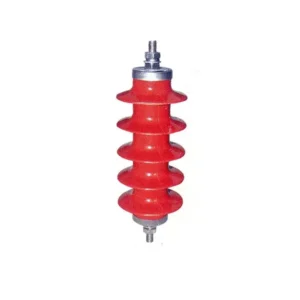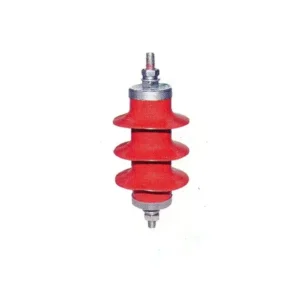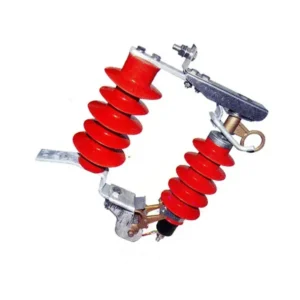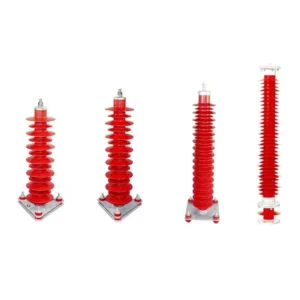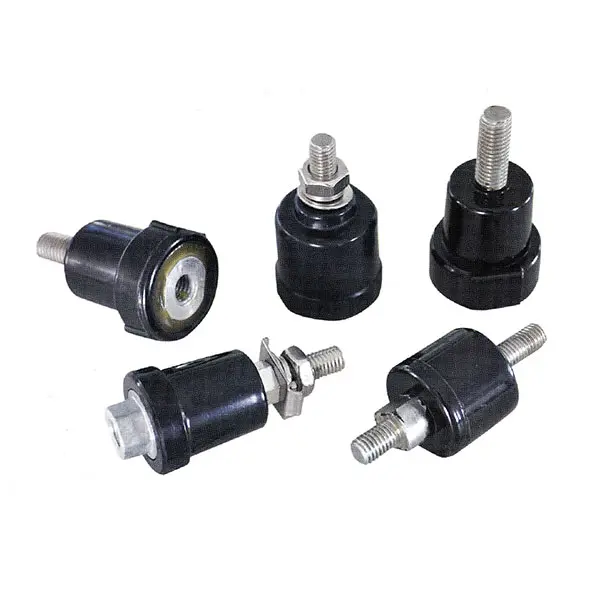
Heat-Explosion Type Disconnector for Zinc Oxide Surge Arrester
The Heat-Explosion Type Disconnector for Zinc Oxide Surge Arresters is a safety accessory installed in series with a metal oxide surge arrester (MOA). When the arrester develops a serious fault, the disconnector operates to separate it from the power system, helping prevent continuous fault current and reduce the risk of damage to surrounding equipment. Its visible disconnection indication also makes failed arresters easier to identify during maintenance. The device is suitable for medium-voltage transmission and distribution systems, including substations, distribution lines, renewable energy facilities, and other outdoor power applications.
Get a QuoteOverview
The Thermal Explosion-Type Disconnector is an accessory installed in series with a zinc oxide surge arrester (MOA). It is designed to isolate a failed arrester from the power system when an internal fault or abnormal condition occurs.
When the arrester reaches a critical failure state, the disconnector operates to separate the arrester from the circuit. This helps prevent continued fault current and reduces the risk of damage to surrounding electrical equipment. It also provides a clear visual indication that the arrester has been disconnected, making fault identification and maintenance easier.
The TLB Series Disconnector uses a thermal explosion-type operating mechanism and is designed according to the relevant requirements of IEC 60099-4 and applicable GB standards. It is suitable for zinc oxide surge arresters used in transmission and power distribution systems, providing an additional layer of operational safety and fault isolation.
Key Features and Advantages
Wide Fault Current Operating Range
The disconnector is designed to respond to a broad range of power-frequency fault currents. This allows it to operate reliably under different fault conditions and grounding arrangements found in medium- and high-voltage power systems.
- High-current operation: Reliable separation at fault currents above 50A.
- Low-current sensitivity: Can respond to fault currents as low as approximately 50mA.
- Flexible system application: Suitable for surge arresters installed in networks with different grounding configurations.
Fast and Reliable Disconnection
The device provides rapid isolation when a surge arrester develops a fault. Its disconnection time can be less than 0.5 seconds at 20A, helping limit the duration of the fault.
The disconnector can also coordinate with automatic reclosing systems. After the failed arrester is isolated, the power system can proceed with its normal reclosing sequence according to the protection scheme.
Strong Mechanical and Sealing Performance
Before activation, the disconnector maintains the mechanical strength and sealing performance required for outdoor operation. Its robust construction helps withstand mechanical loads, moisture, and environmental exposure.
- RBT-3 type: Tensile strength greater than 2000N
- RBT-4 type: Tensile strength greater than 4000N
- Sealed construction: Helps reduce moisture ingress and maintain reliable internal components.
Simple Installation and Replacement
The threaded connection design allows the disconnector to be installed in series with a compatible zinc oxide surge arrester. The connection is secure while keeping installation straightforward.
After the disconnector operates, the failed unit can be replaced separately without removing the complete surge arrester assembly. This simplifies maintenance and can help reduce equipment downtime.
Technical Data
| Item | Unit | Parameter | |
| Applicable Voltage Range | kV | 6 – 220 | |
| Operating Current Range | / | 50 mA – > 50 A | |
| Action Type | / | Heat-explosion disconnection | |
| Tensile Strength | N | ≥ 2000 (RBT-3) / ≥ 4000 (RBT-4) | |
| Applicable Systems | / | Effectively & non-effectively grounded systems | |
| Standards Compliance | IEC 60099-4 / GB 11032-2000 / JB/T 8952-2005 | ||
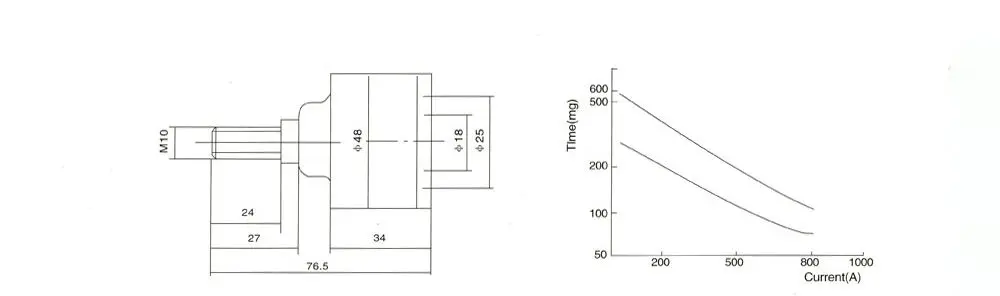
Arrester Disconnector V–S Characteristics
| Current Level | Power Frequency(A) | Square Wave Impluse(2000 μs) | High Current(4/10 μs) |
| 20 | Operation time < 0.5 s | / | / |
| 200 | Operation time < 0.04 s | ||
| 800 | Operation time < 0.02 s | ||
| 600 | / | Continuous (∞) | |
| 100 | / | Continuous (∞) |
Overall and mounting dimensions(mm)
Application Scenarios
The thermal explosion-type disconnector is designed for use with zinc oxide surge arresters in a wide range of medium- and high-voltage electrical installations. It provides an additional level of safety by isolating a failed arrester from the power system.
Typical applications include:
- Substations and Distribution Transformers: Helps isolate failed surge arresters and protect surrounding electrical equipment from prolonged faults.
- Transmission and Distribution Lines: Suitable for overhead lines and distribution networks where surge arresters are installed for lightning and switching surge protection.
- Solar and Wind Power Systems: Provides fault isolation for surge arresters used in renewable energy collection and distribution systems.
- Railway Electrification Systems: Can be used with suitable surge arresters to improve protection and operational safety in railway power networks.
- Telecommunication Power Systems: Suitable for power protection installations where surge arresters require a reliable disconnection mechanism.
The disconnector can be matched with compatible zinc oxide surge arresters and different grounding configurations, making it suitable for 35kV and below power systems where reliable arrester fault isolation is required.